
Plan Interiors During Construction
Planning a home is not limited to architectural drawings and structural strength alone. One of the most overlooked yet crucial stages is interior planning. Many homeowners finalize interiors only after construction is completed, which often results in budget overruns, design limitations, and functional inefficiencies. To avoid these issues, it is important to plan interiors during construction rather than treating interiors as a later-stage activity.
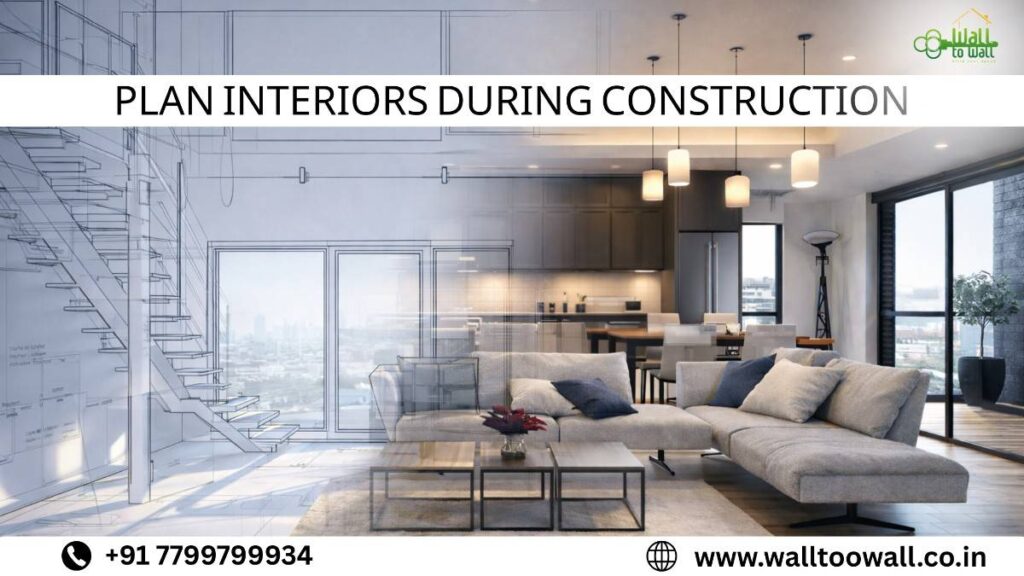
When you plan interiors during construction, every element such as electrical wiring, plumbing points, ceiling heights, and furniture placement works in coordination. This integrated approach reduces unnecessary modifications, prevents design conflicts, and ensures better space utilization. Early interior planning not only helps control costs but also enhances functionality, visual balance, and long-term comfort. This guide explains why it is essential to plan interiors during construction, the common mistakes homeowners make, and how early planning leads to a more practical and well-executed home.
Why It Is Important to Plan Interiors During Construction
Interior design is closely linked to construction decisions. Electrical points, plumbing layouts, ceiling heights, wall thickness, and storage provisions are all influenced by interior requirements. When these elements are finalized after construction is completed, making changes often becomes expensive, time-consuming, and in some cases, impossible.
When homeownersPlan Interiors During Construction, they are able to integrate architectural planning and interior design into a single, coordinated system rather than handling them as separate processes. This approach leads to better space utilization, minimizes material wastage, and results in a more organized and well-balanced home layout.
Early interior planning also ensures that design choices are functional and practical, not just visually attractive. Factors such as storage needs, furniture dimensions, circulation space, and lighting placement can be planned accurately from the beginning. By planning interiors during construction, homeowners avoid compromises later and achieve a home that supports both daily use and long-term comfort.
Common Problems When Interiors Are Planned After Construction
Many homeowners realize too late that interior planning should have begun during the construction phase. Finalizing interiors after the structure is completed often leads to avoidable errors that affect both functionality and cost. The following are some of the most common problems caused by delayed interior planning.
Electrical and Lighting Issues
One of the most frequent mistakes is planning electrical points without considering actual furniture layouts. Switchboards may end up hidden behind wardrobes, charging sockets can fall behind beds or sofas, and additional points are later added through surface wiring. This not only affects the visual quality of the space but also raises safety concerns.
When you Plan interiors during construction, electrical layouts are created based on real usage patterns and furniture placement rather than assumptions. This ensures better accessibility, cleaner finishes, and safer installations.
Plumbing Conflicts
Late interior planning often creates plumbing-related challenges, especially in kitchens and bathrooms. Washbasins and vanity units may not align with plumbing outlets, washing machine points may be inconveniently placed, and improper drainage slopes can limit design options.
Planning interiors early allows plumbing lines to be positioned accurately so that they support both functional requirements and design intent without the need for later modifications.
Ceiling Height Limitations
False ceilings are commonly used to enhance lighting and aesthetics, but when slab heights are not considered during construction, design possibilities become restricted. Poor planning can result in cramped spaces, uneven ceiling levels, or inadequate lighting clearance.
When homeowners Plan interiors during construction, ceiling heights can be optimized in advance to accommodate lighting fixtures, ventilation needs, and design elements comfortably.
Furniture That Does Not Fit Properly
A common issue faced after construction is purchasing furniture that does not fit the available space comfortably. Narrow walkways, doors clashing with wardrobes, and congested rooms are often the result of not planning furniture dimensions in advance.
Early interior planning ensures that room sizes, wall placements, and clearances are designed around furniture requirements, allowing spaces to remain functional and well-proportioned.
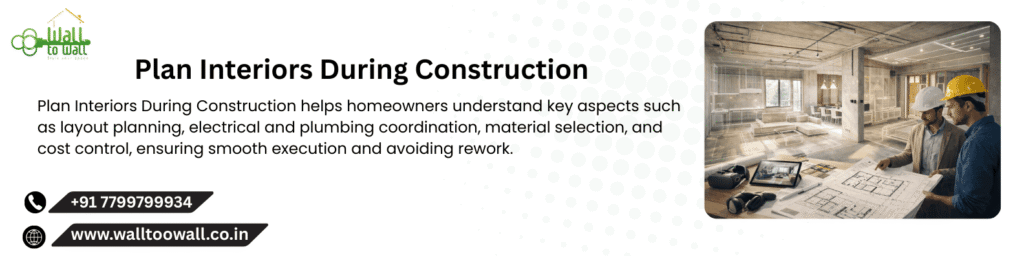
Key Benefits When You Plan Interiors During Construction
Planning interiors at the construction stage offers several long-term advantages that go beyond visual appeal. When interior decisions are aligned with construction work, the overall quality, efficiency, and comfort of the home improve significantly.
Better Space Utilization
When homeowners Plan interiors during construction, every square foot is used with intention. Storage can be integrated within walls, unused or awkward spaces can be eliminated, and room layouts feel open, balanced, and functional. Early planning ensures that spaces are designed for real use rather than adjusted later to accommodate furniture or storage needs.
Cost Control
Interior changes made after construction often require breaking walls, redoing electrical wiring, or altering plumbing lines, all of which increase project costs. By planning interiors during construction, these avoidable modifications are eliminated. This approach helps maintain budget discipline and prevents unexpected expenses caused by rework.
Cleaner Execution
Homes where interiors are planned early tend to have a cleaner and more refined finish. Electrical wiring remains concealed, junctions are accurately placed, and design elements align seamlessly. When interiors are coordinated during construction, the final execution looks more precise and professionally finished.
Long-Term Comfort
Interior planning is not limited to aesthetics; it directly affects daily living. Proper ventilation, well-planned lighting, adequate storage, and smooth movement flow contribute to long-term comfort. When you plan interiors during construction, these elements are integrated from the beginning, creating a home that remains comfortable and functional for years.
Mistakes to Avoid While Planning Interiors During Construction
Even when homeowners plan interiors early, certain mistakes can reduce the effectiveness of the overall design. Being aware of these issues and addressing them at the right stage helps achieve better functionality, safety, and long-term satisfaction.
Ignoring Lifestyle Needs
A common mistake is selecting designs based purely on visual appeal without considering daily routines. Layouts inspired by social media or show homes may look attractive but may not support actual usage patterns. Factors such as family size, work-from-home requirements, storage habits, and movement flow should guide design decisions.
Before homeowners Plan interiors during construction, it is important to understand how each space will be used on a daily basis. Design choices should support comfort and practicality rather than appearance alone.
Overlooking Storage Requirements
Storage needs tend to grow over time, and insufficient planning can quickly lead to cluttered spaces. Without adequate storage, even well-designed homes lose functionality and visual balance.
Early interior planning allows storage solutions to be integrated seamlessly into walls, furniture, and unused areas without affecting the overall design harmony.
Lack of Coordination with Architects and Engineers
Interior planning should not happen in isolation. Structural elements such as beams, columns, slab heights, and load-bearing walls must be considered while designing interiors. Ignoring these aspects can result in design conflicts or unsafe modifications later.
Proper coordination between interior designers, architects, and engineers ensures that designs are practical, feasible, and structurally sound.
Choosing Materials Too Late
Material selection plays a critical role in construction details. Thickness of finishes, type of panels, and installation methods directly affect wall alignments, ceiling heights, and flooring levels. Choosing materials after construction restricts design flexibility and may force compromises.
Room-Wise Planning While Construction Is Ongoing
Planning interiors during construction is most effective when done room by room, as each space has unique functional and design requirements. Early planning ensures that electrical, plumbing, furniture, and lighting elements are aligned with the intended use of each room.
Living Room Planning
The living room often sets the overall tone for the home. When you Plan interiors during construction, you can arrange seating layouts, TV units, lighting, and accent walls in harmony with architectural features. Electrical points, ceiling treatments, and wall finishes are designed to align seamlessly with furniture placement, ensuring both functionality and aesthetic appeal.
Bedroom Planning
Bedrooms require careful consideration for wardrobes, beds, study units, and lighting. Without early planning, wardrobe depths may reduce walking space, or window placements may be blocked. By planning interiors during construction, wardrobe niches, electrical points, and lighting layouts are optimized to maximize comfort, usability, and spatial efficiency.
Kitchen Planning
The kitchen is one of the most technical spaces in a home. Proper placement of plumbing, electrical points, ventilation systems, and storage is crucial for smooth daily use. When interiors are Plan Interiors During Construction, work triangles, countertop heights, and appliance positions can be designed for efficiency, ensuring both functionality and safety.
Bathroom Planning
Bathrooms involve multiple technical requirements, including waterproofing, proper plumbing slopes, and precise fixture placement. Planning interiors after construction often results in leakage issues or the need for costly modifications. By Plan Interiors During Construction, bathrooms are designed for durability, convenience, and long-term performance.
Study Room or Home Office
With the growing trend of remote work and home study, dedicated workspaces require appropriate lighting, ergonomic furniture, and acoustic planning. Integrating these elements during construction ensures that study rooms or home offices are functional, comfortable, and aligned with the overall interior design of the home.
How Interior Planning Impacts Construction Quality
Interior planning has a significant influence on the overall quality of construction, even in ways that may not be immediately obvious. When you Plan interiors during construction, every detail from walls to lighting is coordinated to achieve a refined and cohesive result.
- Clean Wall Alignments: Early planning ensures that walls, partitions, and openings are positioned accurately, resulting in straight lines, precise junctions, and minimal finishing issues.
- Balanced Ceiling Finishes: Proper interior planning allows ceiling heights and false ceiling elements to be aligned with lighting and HVAC requirements, creating a visually balanced space.
- Aligned Flooring Patterns: Flooring layouts, whether tiles, wood, or laminates, can be coordinated with walls, furniture, and room dimensions, reducing waste and avoiding awkward cuts.
- Optimized Lighting Design: When interiors are planned during construction, lighting points are positioned to enhance spatial depth, highlight design features, and provide functional illumination.
If interior planning is delayed until after construction, these details often suffer. Even high-quality materials can appear average if walls, ceilings, floors, and lighting are not coordinated from the beginning.Plan Interiors During Construction ensures that both the technical and aesthetic aspects of the home are executed flawlessly.
When Is the Right Time to Plan Interiors During Construction?
The ideal time toPlan Interiors During Construction is right after the architectural layout is finalized, but before major electrical and plumbing work begins. At this stage, adjustments can be made without compromising structural integrity, giving homeowners the flexibility to make well-informed design and layout decisions.
Interior planning should progress alongside construction milestones, rather than being postponed until the building is complete. Coordinating interior design with construction ensures that electrical points, plumbing lines, ceiling treatments, and furniture placements are integrated seamlessly. This approach minimizes costly modifications later and results in a home that is both functional and visually cohesive from the very beginning.
Role of Drawings and Documentation
Drawings and documentation play a critical role when homeowners Plan Interiors During Construction. Clear and detailed drawings help avoid misunderstandings between different teams involved in the project. Furniture layouts, electrical plans, ceiling layouts, and elevation drawings ensure that everyone works toward the same design intent and execution standards.
Without proper documentation, Plan Interiors During Construction can lead to errors on site. Misaligned electrical points, incorrect ceiling levels, and improper furniture placements are common issues when drawings are unclear or incomplete. Accurate documentation ensures smoother coordination, reduces execution mistakes, and helps translate design concepts into well-finished living spaces.
FAQ's
It is important to plan interiors during construction because interior requirements directly affect electrical layouts, plumbing lines, ceiling heights, and space utilization. Early planning helps avoid costly changes later.
When interiors are planned after construction, homeowners often face issues such as misplaced electrical points, plumbing conflicts, limited design options, and higher modification costs.
The right time to plan interiors during construction is after the architectural layout is finalized and before electrical and plumbing work begins.
No, planning interiors during construction usually reduces overall costs by preventing rework, material wastage, and last-minute structural changes.
Yes, interior planning can influence wall placements, ceiling heights, storage niches, and service layouts, which is why coordination with architects and engineers is essential.
When homeowners plan interiors during construction, room dimensions, furniture layouts, and storage needs are considered early, resulting in better use of available space.
Yes, interior planning is especially important for small homes where space optimization, storage integration, and movement flow are critical.
Interior planning helps determine accurate locations for switchboards, sockets, lighting points, and appliance connections based on actual usage.
Yes, planning interiors during construction allows plumbing lines to align with kitchen and bathroom layouts, reducing leakage risks and layout restrictions.
Yes, ceiling designs depend on slab height, lighting requirements, and ventilation, all of which are easier to manage when interiors are planned early.
Ideally, yes. Planning furniture sizes during construction helps avoid space congestion, blocked windows, and restricted movement areas.
No, interior planning focuses primarily on functionality, comfort, and usability, while aesthetics are a supporting aspect.
Furniture layouts, electrical plans, ceiling plans, plumbing layouts, and interior elevation drawings are commonly required.
Material selection can be done later, but planning interiors during construction allows materials to be integrated correctly without design compromises.
Early planning results in cleaner wall alignments, balanced ceiling finishes, aligned flooring patterns, and better lighting distribution.