
Acrylic Finish vs Laminate Finish
When designing modular kitchens, wardrobes, or storage units, surface finishes play a major role in both appearance and durability. The comparison of Acrylic Finish vs Laminate Finish is common in residential and commercial interior projects because both materials are widely used for kitchen cabinet finishes, wardrobe shutters, furniture panels, and interior surface materials.
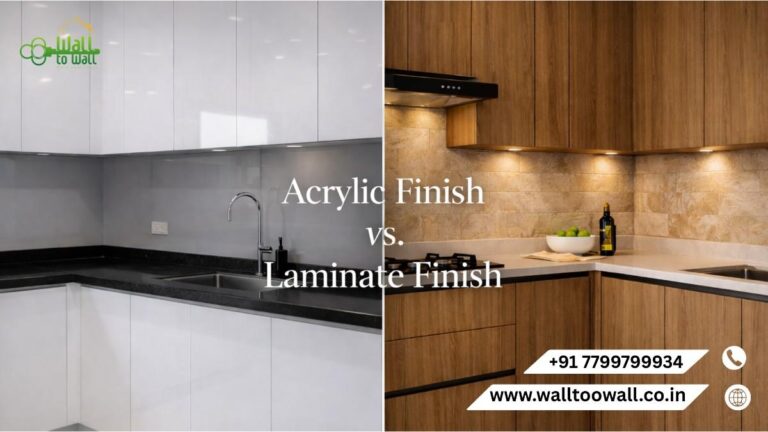
Understanding the differences between Acrylic Finish vs Laminate Finish helps homeowners, architects, and interior designers make informed decisions based on durability, cost, maintenance, aesthetics, and usage patterns. This guide explores every important factor, including high-gloss kitchen cabinets, matte laminate sheets, decorative laminates, modular kitchen materials, wardrobe finishes, scratch resistance, moisture resistance, and long-term performance.
What is Acrylic Finish?
Acrylic finish is a glossy surface layer applied over MDF or HDF boards to create a smooth and highly reflective appearance. It is widely used in modular kitchen cabinets, wardrobe shutters, and modern furniture panels because of its clean, glass-like look. The acrylic sheet is manufactured in a controlled factory setting and then bonded to the base board to achieve a uniform and seamless surface.
Features of Acrylic Finish
- High-gloss finish with strong light reflection
- Smooth and even surface texture
- UV-resistant properties that help prevent fading
- Consistent and vibrant color appearance
- Mostly available in solid color options
When comparing Acrylic Finish vs Laminate Finish, acrylic is often preferred for interiors that prioritize a sleek, contemporary, and polished appearance.
What is Laminate Finish?
Laminate finish is a surface material created by compressing layers of decorative paper and resin together under high pressure. The finished laminate sheet is then adhered to substrates such as plywood, MDF, or particle board to form durable furniture panels and cabinet shutters. It is widely used in laminate kitchen cabinets, wardrobes, office workstations, storage units, and wall paneling due to its adaptability and cost efficiency.
Features of Laminate Finish
- Available in matte, high-gloss, textured, and woodgrain patterns
- Extensive range of colors, prints, and surface designs
- Good resistance to scratches and daily wear
- Budget-friendly finishing option
- Suitable for high-traffic and frequently used spaces
In the comparison of Acrylic Finish vs Laminate Finish, laminates are often chosen for their design flexibility, durability, and practical performance in everyday interiors.
Acrylic Finish vs Laminate Finish: Appearance
A major point of difference in Acrylic Finish vs Laminate Finish lies in how each material looks once installed. The visual impact can significantly influence the overall style of modular kitchens, wardrobes, and storage units.
Acrylic finish is known for its rich, high-gloss surface that reflects light effectively. This mirror-like quality can make compact kitchens appear brighter and more spacious. The smooth and polished surface complements contemporary interiors and minimalist design themes.
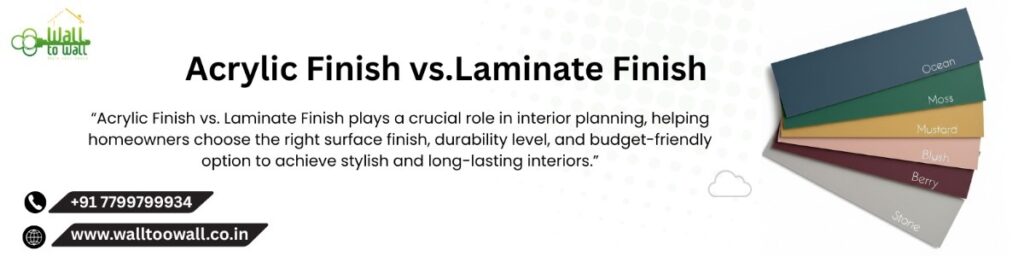
Laminate finish, on the other hand, is available in multiple surface variations, including matte, semi-gloss, textured, and high-gloss options. While glossy laminates provide shine, they generally do not offer the same depth and reflective clarity as acrylic. However, laminates excel in design variety, offering woodgrain textures, stone-inspired patterns, fabric effects, and abstract prints.
Acrylic Finish vs Laminate Finish: Durability
Durability plays an important role when choosing cabinet finishes, wardrobe shutters, and other furniture surface materials. In the comparison of Acrylic Finish vs Laminate Finish, performance under daily use is a key consideration.
Acrylic Durability
- Offers good resistance to UV exposure, helping prevent color fading
- Maintains its shade and gloss for an extended period
- Provides moderate resistance to scratches
- Surface scratches can be more noticeable due to the glossy finish
Acrylic performs well in controlled indoor environments but requires careful handling to maintain its polished look.
Laminate Durability
- Strong resistance to everyday wear and tear
- Generally better scratch resistance compared to acrylic
- Less likely to show minor scuffs or marks
- Suitable for high-use areas such as busy kitchens and office spaces
When evaluating Acrylic Finish vs Laminate Finish in terms of durability, laminates are often considered more practical for heavy-traffic areas, while acrylic is suitable for spaces where aesthetic appeal is prioritized alongside moderate usage.
Acrylic Finish vs Laminate Finish: Maintenance
Maintenance is an important factor when selecting kitchen cabinet finishes and wardrobe surface materials. In the comparison of Acrylic Finish vs Laminate Finish, cleaning requirements and long-term upkeep differ noticeably.
Acrylic Maintenance
- Should be cleaned with a soft microfiber cloth
- Glossy surface tends to show fingerprints and smudges
- Abrasive cleaners or rough scrubbing should be avoided
- Requires careful handling to maintain shine
Because of its reflective surface, acrylic may need more frequent cleaning to preserve its polished appearance.
Laminate Maintenance
- Can be cleaned using mild soap solutions
- More resistant to stains and everyday marks
- Does not easily show fingerprints, especially matte laminates
- Requires minimal effort for routine care
In the overall comparison of Acrylic Finish vs Laminate Finish, laminates are generally considered more practical for households seeking low-maintenance kitchen cabinets and furniture finishes.
Acrylic Finish vs Laminate Finish: Cost Difference
Budget plays an important role in interior planning.
- Acrylic finish is generally more expensive due to manufacturing and installation costs.
- Laminate finish is affordable and widely available.
When analyzing Acrylic Finish vs Laminate Finish, laminate remains the economical choice for modular kitchen materials and wardrobe finishes.
Acrylic Finish vs Laminate Finish: Installation Process
Acrylic Installation
Acrylic sheets are pre-manufactured and carefully bonded to MDF boards. Edge banding is required to protect corners and create a uniform look.
Laminate Installation
Laminates are glued onto plywood or MDF using adhesives. The process is simple and commonly handled by local carpenters.
From an installation standpoint, Acrylic Finish vs Laminate Finish shows laminate as easier to handle and replace if damaged.
Acrylic Finish vs Laminate Finish for Modular Kitchens
Modular kitchen finishes demand both durability and visual appeal.
- Acrylic kitchen cabinets enhance brightness and are ideal for compact kitchens.
- Laminate kitchen cabinets provide better scratch resistance and design flexibility.
In the context of Acrylic Finish vs Laminate Finish, kitchens with heavy daily usage may benefit from laminates, while design-focused kitchens may lean toward acrylic.
Acrylic Finish vs Laminate Finish for Wardrobes
When selecting wardrobe surface finishes, both aesthetics and practicality play a significant role. In the comparison of Acrylic Finish vs Laminate Finish, each option offers distinct advantages depending on the bedroom interior style and daily usage.
Acrylic finish provides a smooth, high-gloss surface that creates a clean and contemporary appearance. Its reflective quality can enhance lighting within the room and complements modern wardrobe designs with minimal detailing.
Laminates, on the other hand, offer greater variety in texture and finish. Options include matte laminates, woodgrain patterns, fabric-inspired textures, and subtle gloss surfaces. This flexibility makes laminates suitable for classic, rustic, or contemporary bedroom themes.
When evaluating Acrylic Finish vs Laminate Finish for wardrobes, the final choice often depends on design preference, expected durability, and maintenance requirements. Acrylic suits interiors focused on a sleek, polished look, while laminates provide broader design versatility and practical everyday performance.
Scratch Resistance Comparison
In the comparison of Acrylic Finish vs Laminate Finish, scratch resistance is an important factor.
- Acrylic surfaces can develop visible scratches over time.
- Laminates are generally more resistant to minor scratches and impacts.
For families with children or high-use storage units, laminates may offer better performance.
Acrylic Finish vs Laminate Finish: Environmental Considerations
When analyzing Acrylic Finish vs Laminate Finish, environmental impact depends largely on the core material used, such as MDF, HDF, or plywood. The quality of adhesives, resins, and manufacturing standards also influences sustainability.
Both acrylic and laminate are synthetic surface finishes. Therefore, selecting products that comply with low-emission standards and ensuring proper indoor ventilation is important. Choosing certified boards with reduced formaldehyde emissions can help improve indoor air quality.
In the comparison of Acrylic Finish vs Laminate Finish, neither material is entirely natural, but responsible sourcing and manufacturing practices can reduce environmental concerns.
Advantages of Acrylic Finish
- Premium high-gloss surface
- Enhances contemporary interior aesthetics
- Strong and consistent color finish
Reflective surface can improve perceived brightness in kitchens and wardrobes
Limitations of Acrylic Finish
- Generally higher material and installation cost
- Fingerprints and smudges may be visible
- Surface can show scratches if not handled carefully
- Requires attentive cleaning and maintenance
Advantages of Laminate Finish
- Economical option for large interior projects
- Wide variety of textures, patterns, and color choices
- Strong resistance to scratches and daily wear
- Simple and low-maintenance cleaning routine
Limitations of Laminate Finish
- Gloss finish does not achieve the same reflective depth as acrylic
- Edges may chip if finishing and installation are not done properly
- Visual appearance may be considered less premium compared to acrylic in high-gloss applications
In the overall evaluation of Acrylic Finish vs Laminate Finish, the decision depends on budget, design goals, durability requirements, and long-term maintenance expectations.
How to Choose Between Acrylic Finish vs Laminate Finish
When deciding between Acrylic Finish vs Laminate Finish, consider:
- Budget allocation
- Desired gloss level
- Frequency of use
- Maintenance capacity
- Interior design style
- Long-term durability expectations
For luxury interiors and high-gloss kitchen cabinets, acrylic may be suitable. For practical, high-traffic areas and cost-effective modular kitchen finishes, laminates are often preferred.
Conclusion
The comparison of Acrylic Finish vs Laminate Finish highlights two popular choices in interior surface materials. Acrylic provides a polished, high-gloss look ideal for modern kitchens and wardrobes. Laminate offers durability, design variety, and affordability, making it suitable for a wide range of applications.
Both materials serve different purposes depending on usage, budget, and aesthetic preference. Evaluating scratch resistance, maintenance requirements, cost factors, and design goals ensures the right decision for any interior project.
FAQ’s
Acrylic finish is a high-gloss surface applied to boards like MDF, offering a mirror-like look. Laminate finish is made by pressing decorative paper and resin layers, available in multiple textures and finishes.
In the comparison of Acrylic Finish vs. Laminate Finish, acrylic is preferred for a sleek, glossy kitchen appearance, while laminates are chosen for durability and cost efficiency.
Yes, acrylic finish generally costs more due to its premium appearance and manufacturing process.
Laminate finish typically offers better scratch resistance compared to acrylic finish.
Yes, acrylic surfaces show fingerprints and smudges more easily and require regular cleaning with a soft cloth.
Yes, laminate finish is widely used for wardrobe shutters due to its variety of textures, patterns, and durability.
High-quality acrylic finishes are UV-resistant and maintain their color for long periods under normal indoor conditions.
In Acrylic Finish vs. Laminate Finish, laminates offer a broader range of designs including matte, woodgrain, textured, and abstract patterns.
Yes, the reflective surface of acrylic can enhance brightness and make small kitchens appear larger.
Yes, laminates provide good moisture resistance when properly installed and sealed.
Minor scratches may sometimes be polished, but deep scratches are difficult to fully repair.
Acrylic finish is often considered more premium due to its deep gloss and smooth surface.
Yes, laminates are commonly used in commercial spaces because of their durability and low maintenance.
Yes, in Acrylic Finish vs. Laminate Finish, proper edge finishing is essential to prevent moisture damage.
The choice depends on budget, desired aesthetics, maintenance expectations, and the level of daily usage in the space.