
Difference Between MDF and Plywood
When selecting materials for furniture and interior design, homeowners often compare different engineered wood options. One of the most common comparisons is the Difference Between MDF and Plywood. Both materials are widely used in furniture, cabinets, wardrobes, and interior panels, but they have different properties, strengths, and applications.
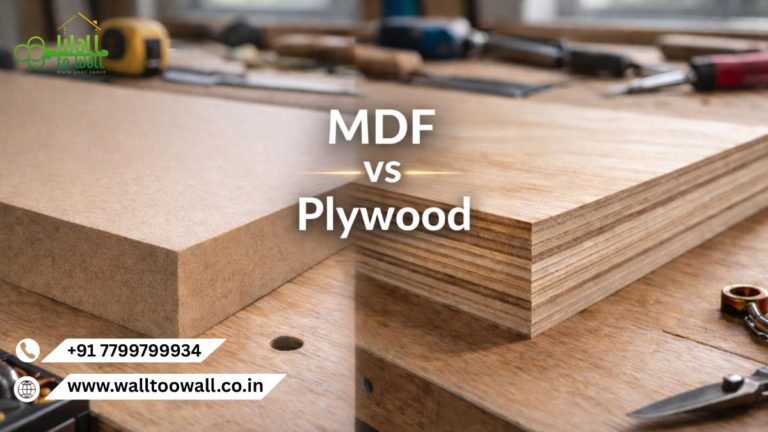
Understanding the Difference Between MDF and Plywood helps homeowners, designers, and contractors choose the right material for durability, appearance, and cost efficiency. Each material has its own manufacturing process, structural characteristics, and ideal usage areas.
What is MDF?
MDF, or Medium Density Fiberboard, is an engineered wood product created by compressing fine wood fibers with wax and resin under high temperature and pressure. This process produces a smooth, uniform board with a consistent structure, making it highly versatile for interior applications.
Unlike natural wood, MDF does not have visible grains, which allows for a flawless surface ideal for painting, laminating, or other decorative finishes. Its smooth texture and workability make it a popular choice for designers and homeowners alike.
- Smooth and Uniform Surface: Perfect for paints, veneers, and laminates.
- Easy to Cut and Shape: Can be crafted into intricate designs and moldings.
- Suitable for Painting and Laminates: Provides a clean, even finish for interior panels and furniture.
- Cost-Effective: Generally lower in price compared to many solid wood alternatives.
- Moderate Moisture Resistance: Standard MDF is less resistant to water than plywood or marine-grade boards, so it’s best used in dry indoor environments.
Plywood Explained
The cross-layered structure makes plywood significantly stronger than many fiber-based boards, such as MDF. It is widely used in construction, furniture, and structural interior applications, providing reliable performance for both residential and commercial projects.
- Strong Layered Structure: The alternating grain layers increase durability and prevent warping.
- Better Load-Bearing Capacity: Suitable for heavy furniture and structural components.
- Higher Moisture Resistance Compared to MDF: Performs well in humid areas like kitchens and bathrooms.
- Suitable for Structural Furniture: Ideal for beds, wardrobes, and cabinets.
- Available in Different Grades and Thicknesses: Offers flexibility for various interior and construction applications..

Difference Between MDF and Plywood in Manufacturing
One of the key aspects of the Difference Between MDF and Plywood lies in their manufacturing processes, which directly impact their strength, durability, and suitability for various interior applications.
How MDF Panels are Created
MDF, or Medium Density Fiberboard, is produced by breaking down wood chips into fine fibers. These fibers are mixed with resin and compressed under high heat and pressure to form dense, uniform boards. The result is a smooth and consistent texture that makes MDF ideal for painting, laminating, and decorative finishes.
Plywood Manufacturing Process
Plywood is created by peeling thin layers of wood veneer from logs and bonding them together using adhesives. These layers are arranged in perpendicular or alternating grain directions, which enhances the board’s strength, prevents warping, and improves structural stability.
The difference in manufacturing between MDF and plywood is fundamental. MDF’s fiber-based composition offers a smooth, workable surface for decorative applications, while plywood’s layered structure provides superior strength and load-bearing capacity. This distinction is a major factor in determining which material is best suited for specific interior projects.
Difference Between MDF and Plywood in Strength
Strength is one of the most critical factors when considering the Difference Between MDF and Plywood. Understanding their load-bearing capabilities helps in choosing the right material for specific furniture and interior applications.
MDF Load
MDF provides moderate strength, making it suitable for lightweight furniture, decorative panels, and interior elements that do not bear heavy loads. While it is easy to shape and ideal for painted finishes, MDF is not recommended for structural furniture such as beds or large wardrobes that require robust support.
Plywood
This layered design improves stability and allows plywood to handle higher loads, making it ideal for furniture frames, cabinets, beds, and other structural components.
Difference Between MDF and Plywood in Surface Finish
The Difference Between MDF and Plywood is also evident in their surface finish, which affects the choice of material for furniture and interior décor.
MDF Load
MDF has a smooth, uniform, and consistent surface, making it ideal for painting, laminates, and other decorative finishes. Its flawless texture allows for intricate designs and provides a clean, professional look for cabinets, wall panels, and furniture elements.
Plywood
Plywood, on the other hand, features natural wood grain patterns. While it can also be laminated or veneered, its surface is slightly rougher compared to MDF. The natural grains give plywood a wood-like appearance, which is desirable for rustic or natural-themed furniture but may require additional sanding or finishing for painted applications.
Difference Between MDF and Plywood in Moisture Resistance
Moisture resistance is a critical factor when choosing materials for interior spaces such as kitchens, bathrooms, and laundry areas. The Difference Between MDF and Plywood becomes particularly important in these moisture-prone environments.
MDF Moisture Resistance
Standard MDF is more susceptible to moisture. It can absorb water and swell if exposed to damp conditions for extended periods. This makes regular MDF less suitable for high-humidity areas unless it is treated with moisture-resistant coatings.
Plywood Moisture Resistance
Plywood generally offers better performance in humid environments due to its cross-layered veneer construction. Certain grades, such as marine plywood, are specifically designed for high moisture resistance and can withstand water exposure better than MDF.
Difference Between MDF and Plywood in Cost
Cost is a significant factor to consider when evaluating the Difference Between MDF and Plywood, especially for homeowners and interior designers managing budgets.
MDF Cost
MDF is generally more affordable than plywood. Its production uses wood fibers and manufacturing by-products, making it a cost-effective option for furniture, cabinets, and decorative panels.
Plywood Cost
Plywood tends to be more expensive due to its layered veneer construction, stronger load-bearing capacity, and higher durability. Premium plywood grades, such as marine plywood, can further increase the cost.
Difference Between MDF and Plywood in Applications
The Difference Between MDF and Plywood is also evident when considering their typical applications in interior design and furniture. Understanding where each material performs best helps homeowners and designers make informed choices.
Common Uses of MDF
MDF is best suited for decorative and lightweight applications due to its smooth surface and ease of shaping. Typical uses include:
- Decorative Wall Panels
- Modular Furniture Components
- Painted Cabinets
- Interior Paneling
- Doors and Moldings
Cluster keywords naturally included: MDF furniture uses, MDF decorative panels
Common Uses of Plywood
Plywood is preferred for structural applications and areas requiring higher strength and durability. Its common uses include:
- Kitchen Cabinets
- Wardrobes
- Beds and Furniture Frames
- Flooring Base Panels
Structural Interior Furniture
Difference Between MDF and Plywood in Durability
Durability is a crucial factor when selecting materials for interior furniture and décor. The Difference Between MDF and Plywood becomes evident in how well each material withstands long-term use, weight, and environmental conditions.
MDF Durability
MDF performs adequately in controlled indoor environments. It is suitable for decorative furniture, wall panels, and light-use items. However, MDF may not handle heavy loads, frequent wear, or moisture exposure effectively, limiting its use in high-stress areas or humid locations.
Plywood Durability
Plywood offers superior durability due to its layered veneer construction and cross-grain structure. This gives it better structural stability, higher load-bearing capacity, and greater resistance to wear and moisture compared to MDF.
When to Choose MDF
MDF can be an excellent choice for certain interior projects, particularly when aesthetics, smooth finishes, and budget are key considerations. Consider using MDF in the following scenarios:
- Smooth Painted Finishes Are Required: MDF’s uniform surface allows for flawless painting and decorative finishes.
- Decorative Panels or Moldings Are Needed: Its ease of cutting and shaping makes MDF ideal for intricate designs and moldings.
- Budget Constraints Are Important: MDF is generally more affordable than plywood, making it suitable for cost-effective furniture and interior panels.
- Furniture Is Lightweight or Non-Structural: Ideal for items that do not bear heavy loads, such as wall-mounted shelves, cabinet doors, and decorative units.
When to Choose Plywood
Plywood is often selected when:
- Furniture must support heavy weight
- Moisture resistance is important
- Structural strength is required
- Long-term durability is a priority
Conclusion
Understanding the Difference Between MDF and Plywood helps homeowners and designers make better material decisions for interior projects. MDF provides a smooth surface suitable for decorative finishes and cost-effective furniture. Plywood, however, offers greater strength, durability, and moisture resistance, making it ideal for structural furniture and kitchen applications.
The choice between these materials depends on the specific requirements of the project, including budget, durability expectations, design preferences, and environmental conditions. By carefully evaluating the Difference Between MDF and Plywood, homeowners can select the most appropriate material for their furniture and interior design needs.
FAQ’s
Plywood is stronger and more suitable for load-bearing furniture, while MDF is best for lightweight and decorative applications.
MDF has a smoother, uniform surface, making it ideal for painting, laminates, and decorative finishes.
Plywood generally offers higher moisture resistance, especially marine or treated grades, while standard MDF can swell when exposed to water.
MDF is used for decorative wall panels, modular furniture, painted cabinets, interior paneling, doors, and moldings.
Plywood is preferred for kitchen cabinets, wardrobes, beds, furniture frames, flooring base panels, and structural interior furniture.
Yes, MDF is generally more affordable due to its fiber-based composition, while plywood is more expensive because of its layered veneer construction.
Plywood is more durable, with better structural stability and long-term performance. MDF is suitable for indoor, dry environments and lightweight furniture.
Standard MDF is not ideal for high-moisture areas, but moisture-resistant MDF variants can be used with proper sealing. Plywood is generally better for kitchens and bathrooms.
Yes, plywood’s layered structure provides strong load-bearing capacity, making it ideal for beds, wardrobes, and other heavy furniture.
Yes, MDF is easy to cut, shape, and carve, which makes it ideal for decorative moldings and intricate furniture designs.
MDF uses compressed wood fibers and resin, often from recycled wood, while plywood requires cutting logs into veneers, potentially consuming more natural wood.
MDF is not recommended for heavy structural furniture. It is better for decorative and lightweight applications, while plywood should be used for structural needs.
Consider your project’s needs: use MDF for smooth finishes, decorative panels, or budget-friendly furniture, and choose plywood for strength, moisture resistance, and long-term durability.